Adaptive Reward Systems: How Casinos Tailor Roulette Bonuses to Different Player Archetypes
Written by Klara Zimmermann · Jun 25, 2026

Adaptive Reward Systems: How Casinos Tailor Roulette Bonuses to Different Player Archetypes
Casinos have developed sophisticated adaptive reward systems that analyze player behavior and assign tailored roulette bonuses based on distinct archetypes, and these platforms track betting patterns, session duration, and deposit frequency to refine offers in real time. Data from industry reports show that such segmentation increases player retention rates while operators adjust parameters like wagering multipliers and cashback percentages to match individual profiles.
Defining Key Player Archetypes in Roulette Markets
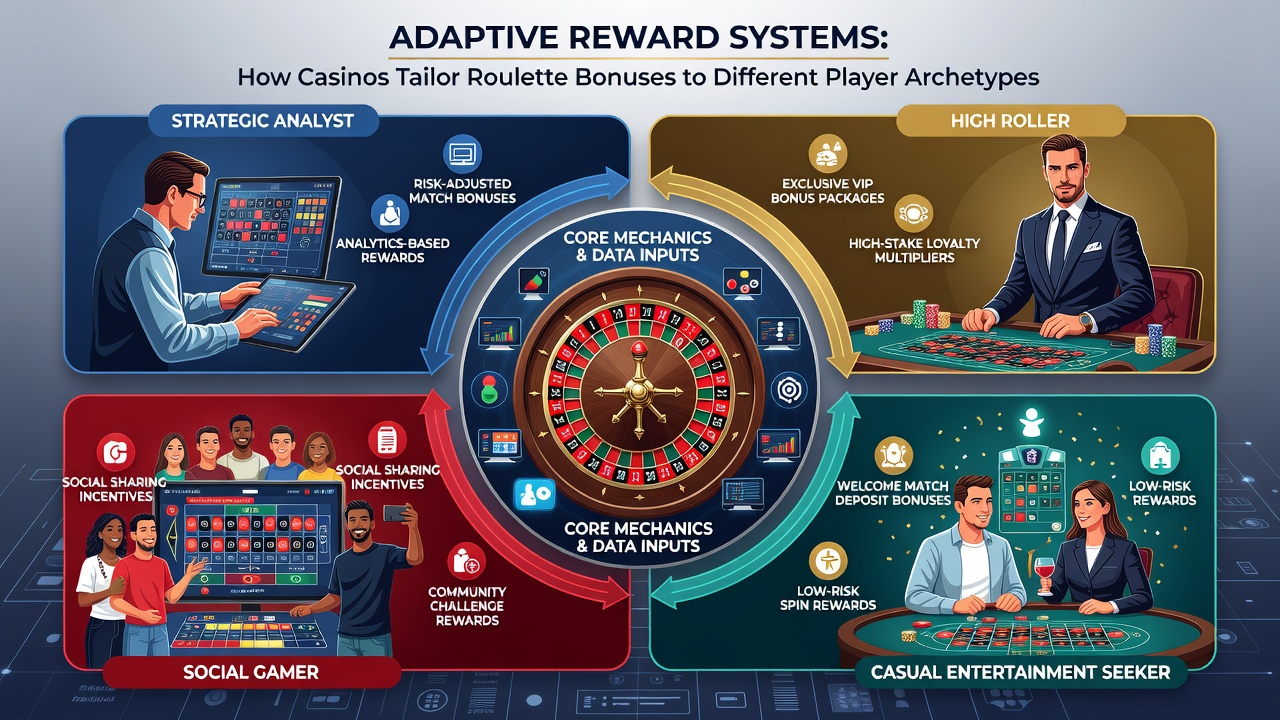
High-volume participants often receive bonus structures emphasizing larger match percentages on deposits because they place bigger wagers per spin, whereas casual players encounter smaller but more frequent free spin allocations that encourage extended low-stakes sessions. Strategic players who favor specific wheel sections or bet types see promotions that include risk-free rounds or reduced house-edge variants, and these adjustments stem from algorithms that process historical data collected across thousands of sessions.
Observers note that recreational users who log in sporadically tend to receive time-limited boosts designed to prompt quicker returns, while consistent daily participants unlock tiered loyalty increments that scale with cumulative roulette volume. Research conducted by institutions such as the University of Nevada, Las Vegas indicates that archetype-based tailoring correlates with measurable shifts in average session length across different market segments.
Data Analytics Driving Personalization Engines
Modern systems integrate machine learning models that categorize users within milliseconds of each login, and these models factor in variables including preferred roulette variants, average bet size, and response rates to prior promotions. Operators in regions monitored by the Nevada Gaming Control Board have reported deploying similar frameworks since early 2025, with refinements continuing through June 2026 as new datasets become available.
Algorithms distinguish between risk-tolerant profiles that chase volatility and risk-averse profiles that prioritize steady small wins, then route appropriate bonus types accordingly. For instance, volatility seekers might receive multipliers that amplify rare large payouts, whereas steady players obtain cashback mechanisms that soften incremental losses over multiple spins.
Implementation Across Global Casino Operations
European operators following guidelines from the Malta Gaming Authority apply these systems to both land-based and online roulette environments, and North American platforms regulated by state-level bodies mirror the approach with localized variations. Canadian provincial authorities have documented parallel developments where adaptive rewards help differentiate offerings in competitive provincial markets.
Bonuses for each archetype incorporate specific triggers such as minimum spin counts or deposit thresholds, yet the underlying logic remains consistent: match the reward scale and structure to observed behavior patterns. One documented case involved an operator adjusting free spin quantities for mid-tier players after analytics revealed higher engagement when bonuses reset weekly rather than monthly.
Regulatory Context and Compliance Measures
Regulatory frameworks require transparent disclosure of how bonus terms vary by player segment, and operators must maintain audit trails that demonstrate non-discriminatory application of rules. In June 2026 several jurisdictions updated reporting standards to capture more granular data on adaptive promotions, ensuring that systems do not inadvertently favor or exclude protected categories of users.
Compliance teams review archetype assignments regularly to confirm alignment with responsible gaming protocols, and automated flags alert staff when bonus parameters deviate from approved ranges. These safeguards coexist with the commercial goal of optimizing player lifetime value through precise reward calibration.
Conclusion
Adaptive reward systems continue to evolve as casinos refine their understanding of roulette player archetypes through expanded datasets and improved analytics, and the resulting bonus structures reflect measurable differences in behavior across segments. Continued regulatory oversight in multiple jurisdictions ensures these tools operate within established boundaries while delivering differentiated experiences to distinct user groups.