Charting Pathways From Referral Incentives to Roulette Variant Access in Licensed Platforms
Written by Sam Lange · Aug 13, 2026
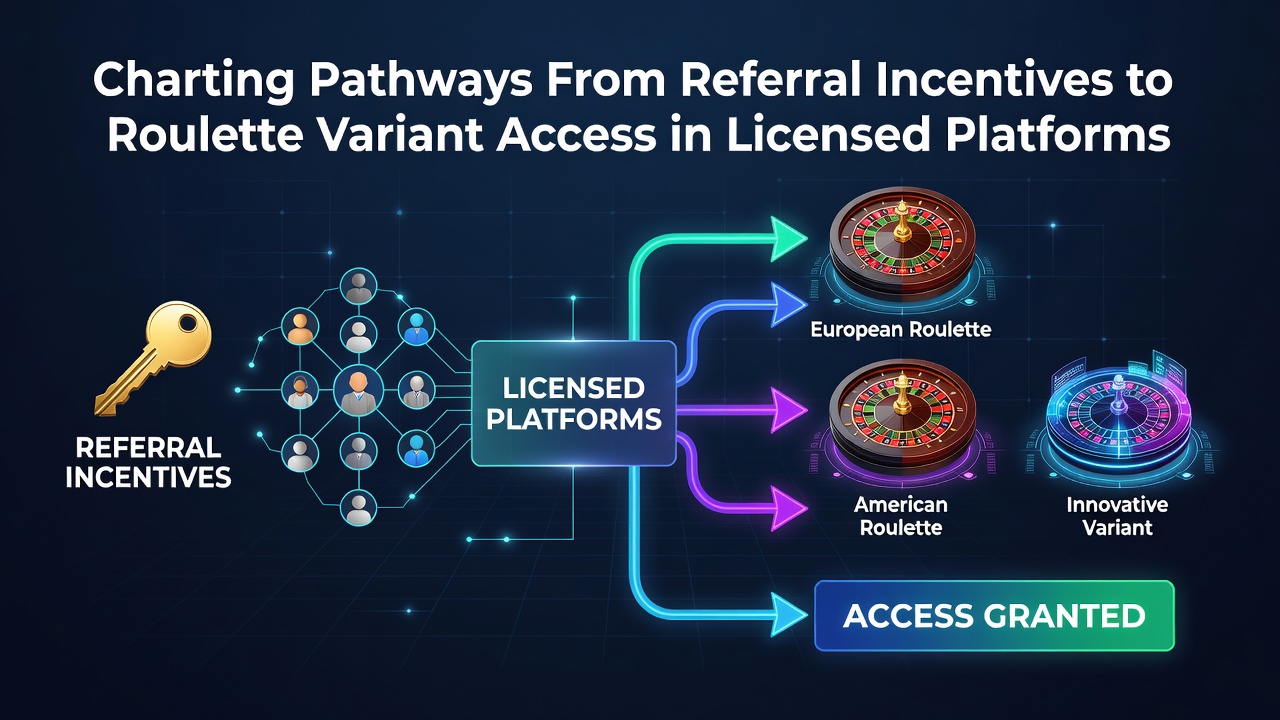
Charting Pathways From Referral Incentives to Roulette Variant Access in Licensed Platforms
Referral incentives operate as structured entry mechanisms within licensed gaming platforms, where existing users share unique codes that grant new participants initial credits or reduced wagering thresholds. These systems connect directly to game libraries that include multiple roulette variants, ranging from single-zero European formats to multi-ball American configurations and live-dealer French wheel offerings. Data from regulatory filings indicate that platforms integrate referral tracking software with account verification protocols, allowing seamless progression from sign-up bonuses to full variant catalogs once identity checks clear.
Referral Structures and Platform Integration
Licensed operators embed referral programs into their backend systems so that each successful code activation logs player activity and unlocks tiered permissions. Observers note that this process typically requires completion of know-your-customer steps before any roulette variant becomes available, and the same verification layer often governs access to progressive jackpot wheels or speed roulette tables. In August 2026 several North American and European jurisdictions reported updated compliance modules that link referral reward ledgers directly to game-server permissions, reducing manual review times while maintaining audit trails.
According to records maintained by the Nevada Gaming Control Board, referral-driven registrations accounted for measurable portions of new accounts during the first half of 2026, with variant selection logs showing elevated engagement on French roulette layouts once initial bonus conditions cleared. Similar patterns appear in Canadian provincial reports, where referral pathways feed into centralized player databases that authorize access across provincial licensing boundaries.
Variant Access Mechanics Across Jurisdictions
Once a referred account reaches verified status, platforms route users through segmented game menus that display only licensed variants for their region. European roulette appears first in many sequences because its house-edge profile aligns with minimum return-to-player thresholds set by multiple regulators. American double-zero variants follow after additional responsible-gaming acknowledgments, while live-dealer streams require separate bandwidth and latency certifications that platforms activate only after the referral chain confirms sustained play patterns.
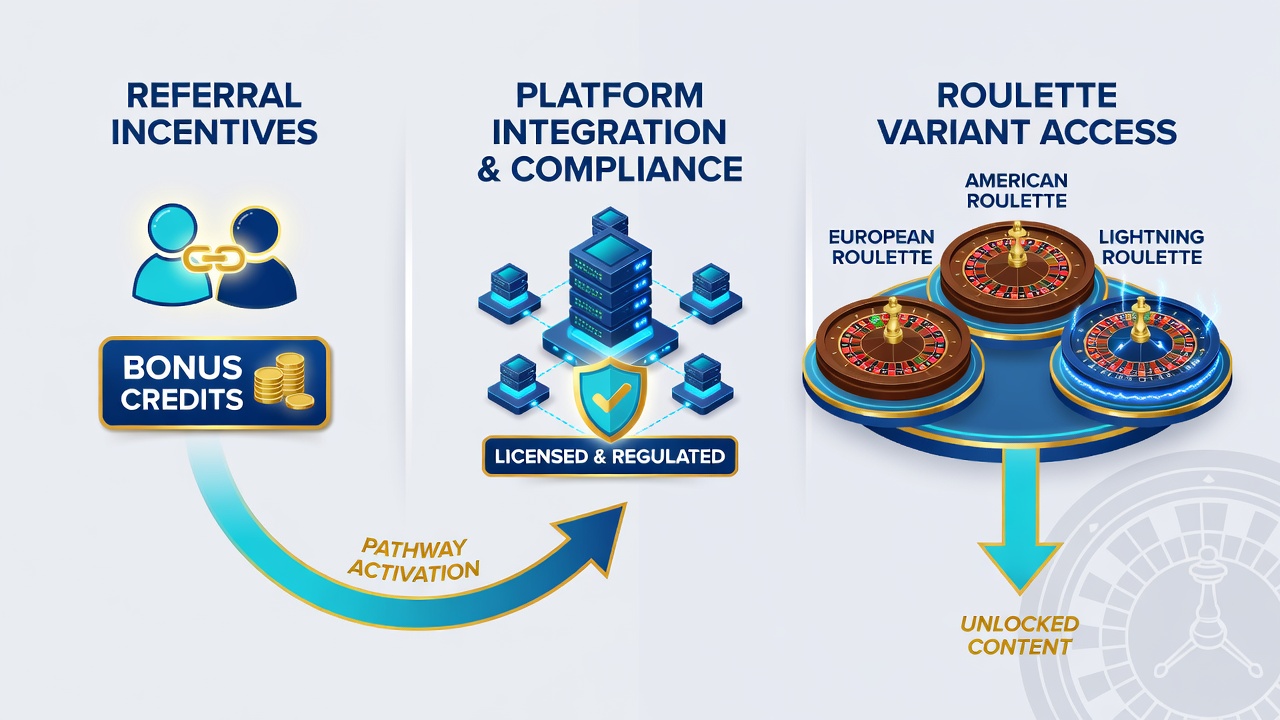
Research published by the University of Nevada, Las Vegas International Gaming Institute tracks how these access sequences vary by license type. Multi-jurisdiction operators often maintain parallel servers so that a single referral code can open different variant sets depending on the player’s geo-location tag. Figures reveal that players completing referral milestones in Ontario-licensed environments gained access to an average of three additional roulette formats within fourteen days of verification, compared with two formats in single-state US markets.
Regulatory Oversight and Technical Safeguards
Alcohol and Gaming Commission of Ontario documentation outlines mandatory API hooks that tie referral reward disbursement to real-time game availability flags. These hooks prevent bonus funds from applying to unlicensed variants and automatically restrict play if a player’s location shifts outside approved boundaries. Parallel requirements from Australian state regulators emphasize audit logs that record every referral-triggered variant unlock, creating immutable records for quarterly compliance reviews.
Industry reports compiled by the European Gaming and Betting Association detail how licensed platforms use token-based authentication to map referral incentives onto specific roulette engines. When a player redeems a referral credit, the system issues a temporary access token valid only for variants whose random-number generators carry current certification stamps. This architecture ensures that August 2026 software updates rolled out across multiple continents maintained continuity between incentive ledgers and game catalogs without introducing new compliance gaps.
Player Journey Mapping
Case studies compiled by independent testing laboratories illustrate typical progression paths. A referred user begins with a standard account, activates the code, completes verification, then receives a dashboard prompt listing available roulette variants ordered by regulatory approval date. Selection of any variant updates the player’s activity profile, which in turn feeds back into the referral network’s performance metrics for the originating user. Observers note that this closed-loop structure appears consistently across platforms holding licenses in both North American and Australasian markets.
Conclusion
Pathways that begin with referral incentives ultimately converge on controlled access to roulette variants through layered verification, geo-fencing, and real-time certification checks. Regulatory bodies in Nevada, Ontario, and Australian states maintain parallel oversight frameworks that require operators to demonstrate unbroken linkage between incentive disbursement and game authorization. These mechanisms continue to evolve with each software cycle, yet the core sequence remains consistent: referral activation leads to verification, which in turn grants variant access within the boundaries set by each license.