Integrating Roulette Bonuses into Unified Casino Loyalty Ecosystems
Written by Sam Lange · Aug 17, 2026

Integrating Roulette Bonuses into Unified Casino Loyalty Ecosystems
Modern casino operators coordinate roulette promotions directly with centralized loyalty platforms that track player activity across slots, table games, and live dealer environments, and this alignment creates pathways for sustained engagement rather than isolated bonus events. Data from industry reports indicates that unified systems allow points earned through roulette spins to contribute toward tier advancement, which in turn unlocks personalized rewards in other gaming verticals.
Core Components of Integrated Loyalty Frameworks
Casino loyalty ecosystems typically operate through multi-tier structures where roulette bonus credits convert into loyalty points at predefined ratios, while operators monitor redemption patterns to adjust future offers based on aggregate behavior. In August 2026 several major platforms introduced dynamic multipliers that scale according to a player's current tier status, so a mid-level member receives enhanced roulette rewards that simultaneously accelerate progress toward higher benefits such as exclusive event access or cashback percentages applied across the entire account.
These frameworks rely on real-time data synchronization between game servers and the central customer relationship management database, and the result is that every roulette wager updates the player's profile instantly without requiring separate manual claims. Observers note that such automation reduces friction and encourages consistent participation because rewards appear automatically in the main loyalty dashboard.
Technical Alignment Between Roulette Mechanics and Loyalty Algorithms
Software providers configure roulette games to feed wager data directly into loyalty engines using standardized APIs, and this integration ensures that both European and American wheel variants contribute equally to point totals regardless of house edge differences. One case involved a North American operator that adjusted its roulette bonus structure so that live dealer sessions awarded double points during off-peak hours, thereby balancing floor traffic while maintaining overall loyalty progression rates.
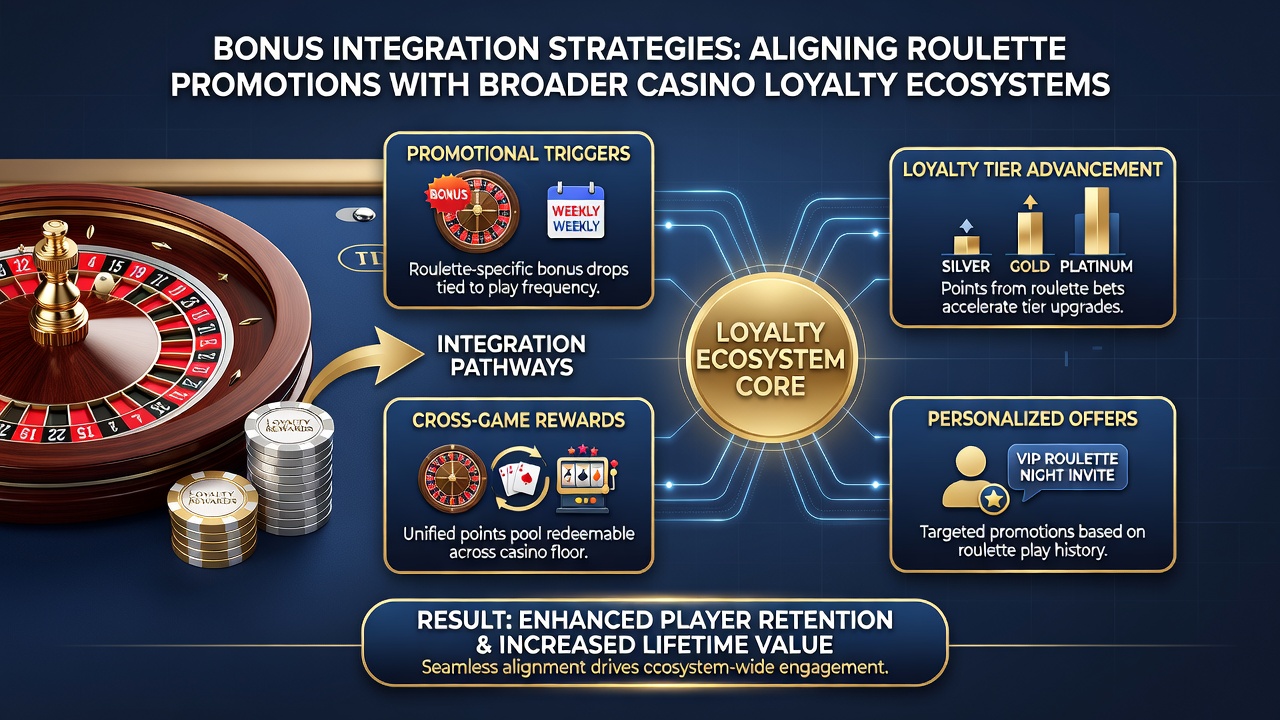
According to research published by the American Gaming Association, operators that link promotional mechanics to loyalty databases report higher retention metrics because players perceive greater value when single-game bonuses influence benefits available throughout the property or platform. The same report highlights that cross-category point pooling prevents fragmentation where roulette enthusiasts might otherwise remain siloed from broader reward structures.
Regional Regulatory Influences on Integration Practices
Regulatory bodies in different jurisdictions shape how operators merge roulette promotions with loyalty programs, and the Australian Gambling Research Centre has documented that clear disclosure requirements around point conversion rates lead to more transparent bonus structures. In markets where regulators mandate detailed reporting of promotional spend, casinos often embed loyalty tracking within the bonus itself so that every wager automatically registers toward both the promotional target and the player's tier status.
European frameworks similarly emphasize player protection through mandatory cool-off mechanisms, yet integrated systems allow these pauses to preserve accumulated points rather than resetting progress, which maintains continuity across roulette campaigns and other loyalty activities. Canadian provincial regulators have examined similar models, and findings suggest that unified tracking supports responsible gambling tools by providing players with a single view of their activity and reward status.
Practical Implementation Examples Across Operators
One established European platform introduced a roulette-specific loyalty accelerator that converts a percentage of losses into bonus funds redeemable only after the player completes additional wagers on non-roulette titles, and this approach channels engagement toward the broader ecosystem while still rewarding roulette participation. Another operator in the Asia-Pacific region linked seasonal roulette tournaments to year-round loyalty tiers so that tournament points feed directly into the main program, eliminating the need for separate qualification tracks.
Those who've studied these implementations report that successful integrations feature clear communication within the player interface, where the loyalty dashboard displays projected point gains from upcoming roulette promotions alongside existing tier benefits. Such visibility helps players understand how individual bonuses fit into their overall relationship with the casino rather than treating them as standalone incentives.
Conclusion
Effective bonus integration requires continuous synchronization between roulette promotional tools and the overarching loyalty architecture, and operators that achieve this alignment benefit from streamlined operations alongside improved visibility into player preferences. As platforms evolve through 2026 and beyond, the capacity to route roulette rewards through unified systems continues to define competitive positioning in the broader casino landscape.